It’s been a long time since I last posted anything here, huh.
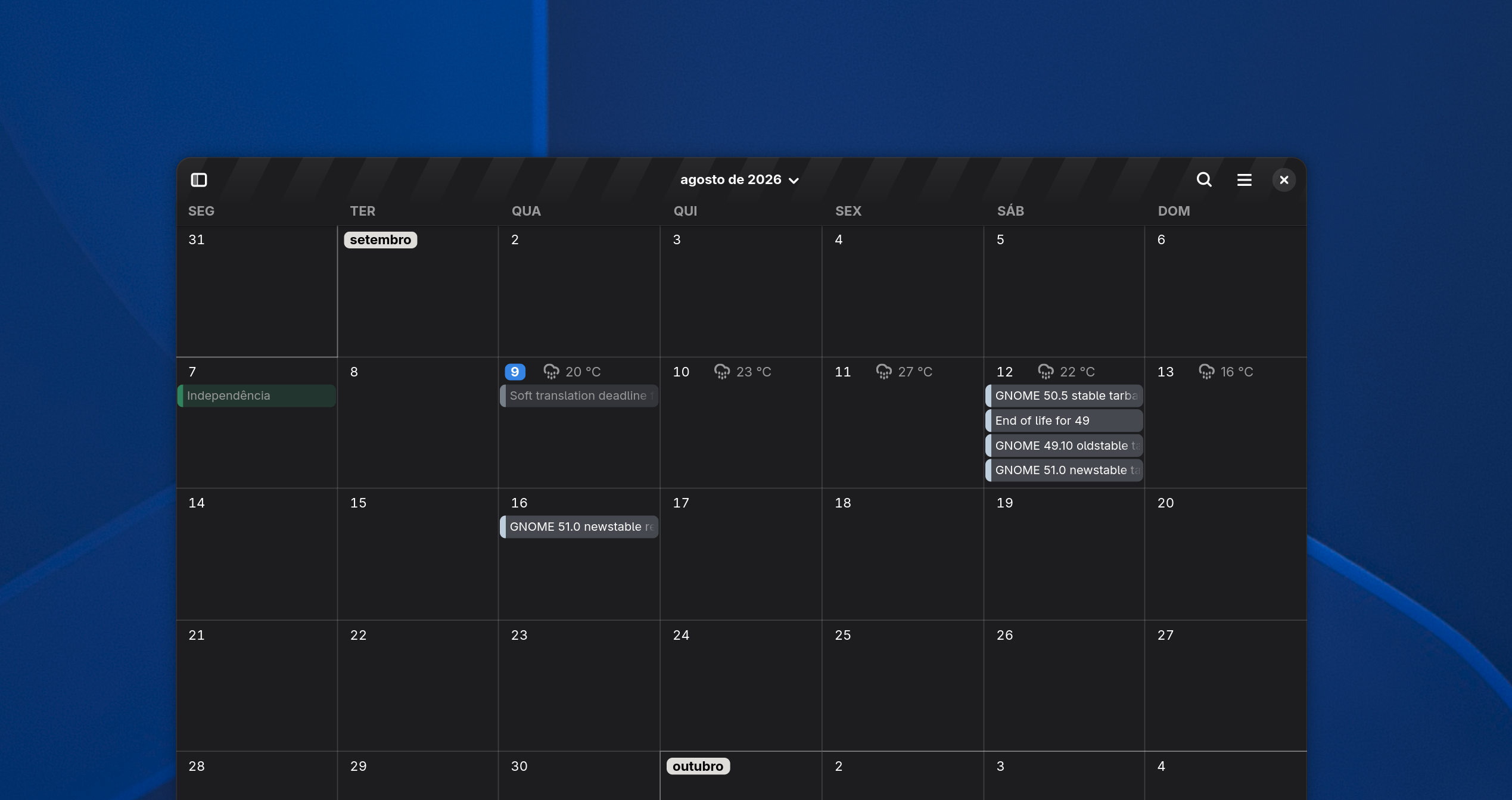
Well, a few hours ago I was preparing the release notes for the next release of GNOME Calendar. It is yet to be reviewed, but this is how it reads at the time I write this blog post:
This is a remarkable release for us, as it is one of the biggest releases in the history of the project, and we're excited to share a slightly longer update on it.

The first thing many users will notice is how GNOME Calendar will feel snappier now. During the past six months, a lot of work was put in optimizing GNOME Calendar from the inside out. This includes a major change in how it handles events internally, vastly reducing the amount of data transferred between GNOME Calendar and other components of the desktop, and applying many different tricks and strategies to make it render faster. Really, this is probably the most optimized the project has ever been.

Another front in which GNOME Calendar has been consistently improving is accessibility and keyboard navigation. During this development cycle, another big batch of improvements on these fronts were merged. You can now navigate between events and days in the Month view using only your keyboard. Notification bubbles are properly read out loud (thanks also to Orca developers for accommodating our use case!). The Week view is now properly styled when the high-contrast setting is enabled.

[…]

On the non-technical side, in the past few months the project received contributions from many new contributors, as well as long time contributors. Our issue tracker continues to be in excellent shape, well triaged, and properly labeled. Our three latest releases were the biggest releases in the history of the project. Thank you all very much for using, developing, documenting, translating, testing, and fixing GNOME Calendar!
This release of Calendar has lots to talk about. It is, as mentioned, the biggest release in the history of the project. Not in numbers of line added, or patch count, but certainly in terms of contributor involvement, code reviews, code quality, and features. We’re not just a bunch of bored university students pushing unreviewed patches non-stop to the main branch anymore!
For the next few weeks, I’ll be writing more focused blog posts about the work I’ve done in Calendar this cycle. I’ve focused mostly on performance and reorganizing the internals of the application to be more resilient. It’s not glorious work, but I do love working on optimization problems!
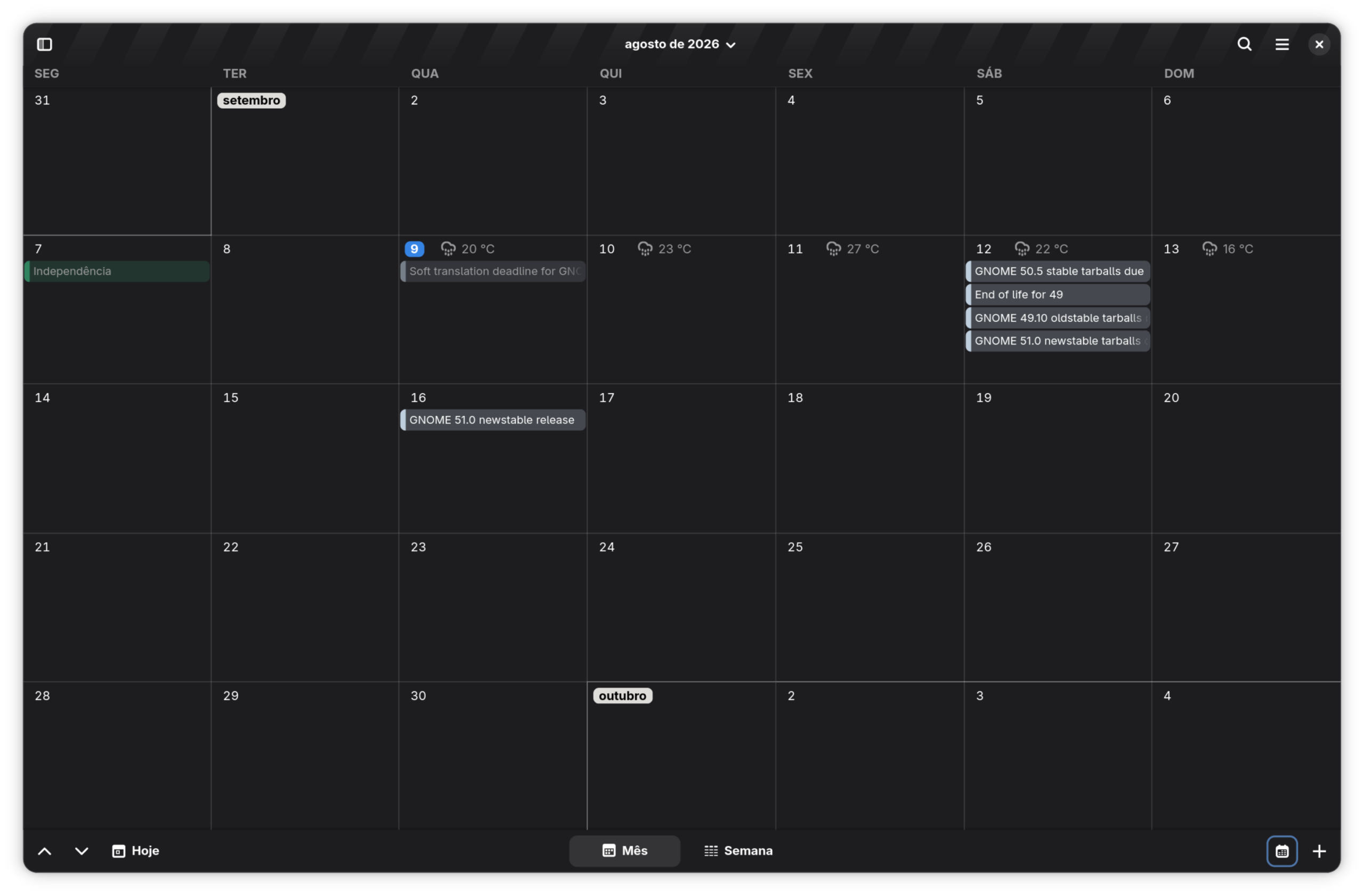
GNOME Calendar will complete 15 years in a few months from now. The project is one of the few lucky projects in GNOME – and, I’d argue, in the free software scene in general – that has such a thriving community of contributors. It’s one of the few GNOME core apps that survived the great purge. It’s a super rare example of a GNOME app with a product manager.
It is also the project that brought me in in GNOME, so pardon me if I get a little emotional when I see the project thriving as it is, and think back of all the good friends that came and went, the hard lessons from maintaining it over over a third of my life, and the prospects for the future.
GNOME Calendar is entirely developed and maintained by volunteers. We have never received any kind of funding, be it corporate, from grants, or other forms of patronage. This gives us freedom from these kinds of influences (mostly to complain about how so many big companies fail to meet the calendaring standards that they themselves helped create), but the reality is that it is really damn hard to pitch for funds for a calendaring application.
Please consider donating to GNOME, or to the individual contributors of your choice. It makes a difference. All the difference.
Leave a Reply